

The heat that hit the Jersey Shore from July 1 to July 5 was not normal summer heat.
It was rare, dangerous and even deadly.
In New Jersey, 29 people died during the stretch of extreme heat, according to reports. Heat is often the deadliest type of weather in the United States, and this heat wave showed why.
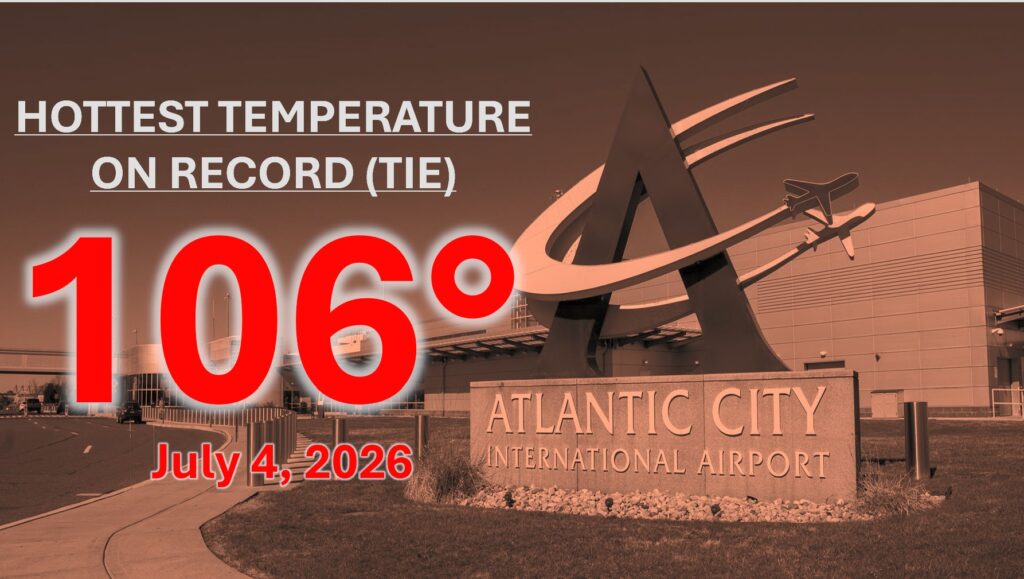
The biggest number came from Atlantic City International Airport. On the Fourth of July, the airport reached 106 degrees. That tied the hottest temperature ever recorded there.
Several daily records were also broken during the heat wave.
On July 2, Millville reached 100 degrees. Atlantic City International Airport hit 103 degrees that same day. More records were broken on July 3 at Atlantic City International Airport, Millville, Atlantic City Marina and Freehold.
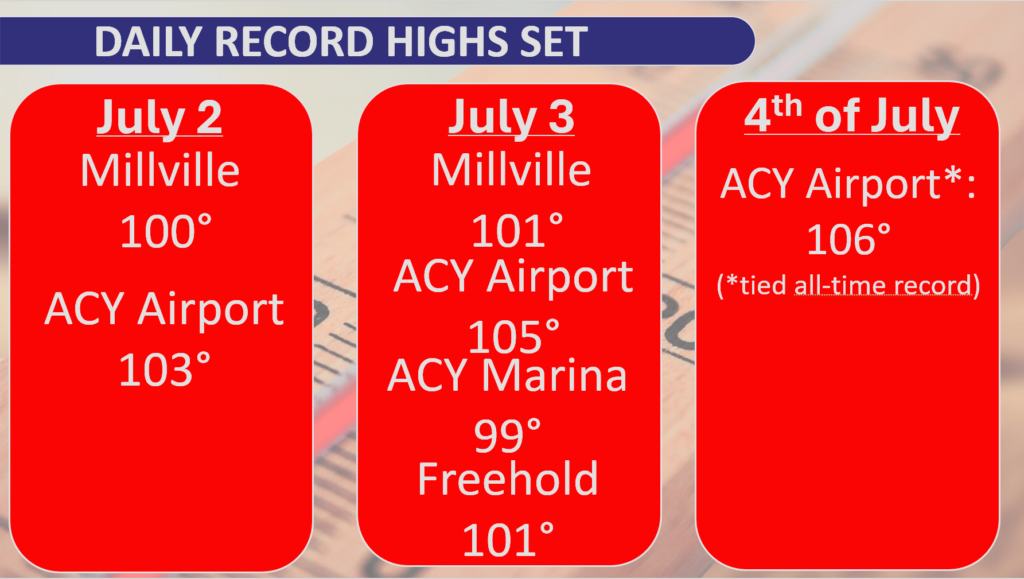
Then came July 4, when Atlantic City International Airport tied its all-time record high of 106 degrees.
The nights were also unusually hot.
For three nights in a row, overnight temperatures stayed near record levels. From the night of July 3 into July 4, Atlantic City International Airport never dropped below 80 degrees. That is one of the warmest nights ever recorded there.
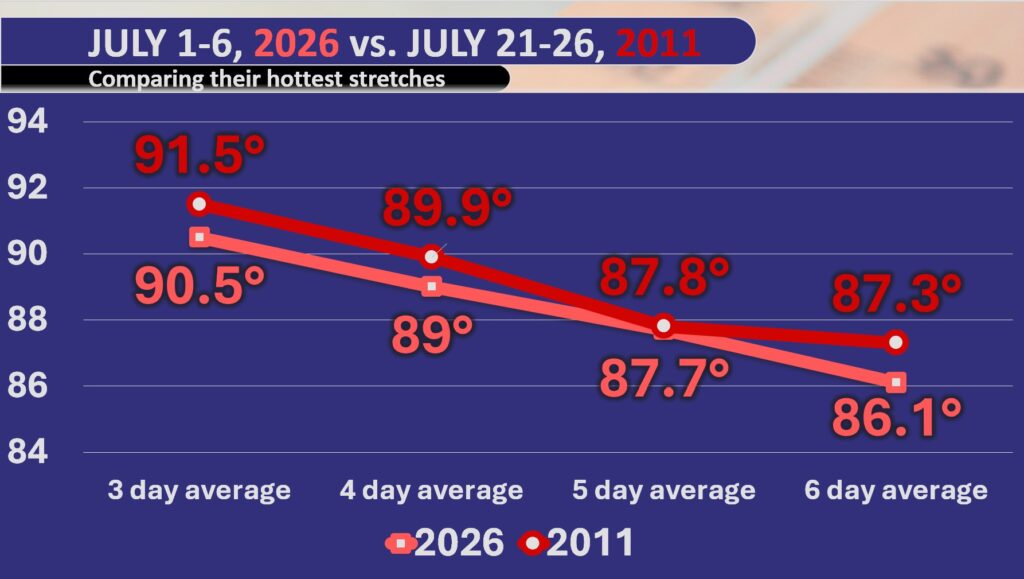
The last heat wave close to this one happened in July 2011. That was also when Atlantic City International Airport reached 106 degrees.
When comparing the July 2026 heat wave to the July 2011 heat wave, this one was close, but just below the 2011 stretch. Still, for inland parts of the coastal counties, this was likely the second or third hottest stretch on record going back to the 1940s.
So why did it get so hot?
A strong area of high pressure was sitting over the Mid-South. High pressure spins clockwise. That helped send hot air from the Gulf region into the Midwest and then toward New Jersey.
By Friday and Saturday, winds turned more from the west and northwest. That kept the air a little less humid than usual. Dew points were mostly in the 60s instead of the very sticky 70s.
That drier air helped temperatures climb even higher.
When the air is very humid, it can be harder for temperatures to rise as much. But when the air is dry, the sun can heat the ground more easily. That is why desert cities like Phoenix can reach the 110s, while a humid city like Miami rarely gets above 99 degrees.
Climate change also played a role.
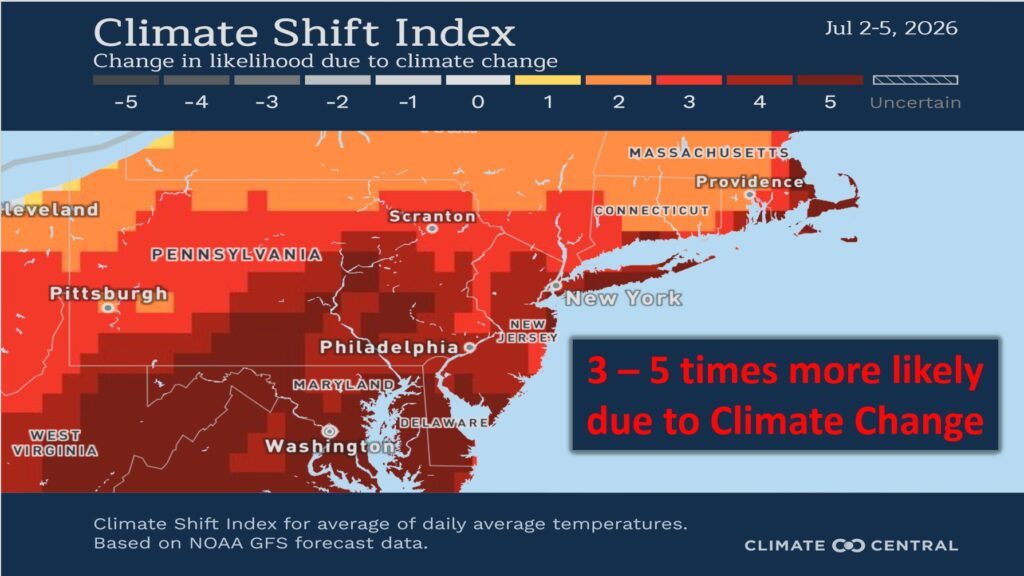
Because of human-caused climate change, this kind of heat from July 2 to July 5 was made about three to five times more likely. That does not mean the heat wave could not have happened without climate change. It means climate change increased the odds.
Think of it like rolling a die. If one side of the die is changed to another six, you can still roll other numbers. But your chances of rolling a six go up.
That is what climate change is doing with extreme heat. It is loading the dice toward hotter weather.
The heat in South Jersey felt more like the desert Southwest. From July 1 to July 5, the average temperature at Atlantic City International Airport was close to what Tucson, Arizona, normally sees during the same time of year.
Along the coast, Atlantic City Marina had temperatures closer to what Honolulu, Hawaii, usually feels in early July.
In other words, New Jersey lived through desert and tropical heat at the same time.
This was not just a hot few days. It was one of the most extreme heat waves on record for the Jersey Shore region.