What happens beneath the ocean when hurricanes and coastal storms move through? 🌊 Rutgers oceanographer Julia Engdahl joins Tidal Flooding Talk to explain ocean gliders, storm surge, high-tide flooding and how better underwater observations could improve hurricane forecasting and coastal preparedness along the Jersey Shore.
Experience Tidal Flooding Talk every Tuesday night, America’s leading show on coastal flooding resilience. Hosted by the New Jersey Coastal Coalition, which formed after Superstorm Sandy in 2012, it empowers leaders with dynamic workshops. Visit njcoastalcoalition.com to learn more!
These observations can help scientists understand how the ocean interacts with hurricanes and other coastal storms.
One important factor is ocean stratification. Ocean water is not always mixed evenly from the surface to the bottom. Different layers can have different temperatures and salt levels.
That matters because warm ocean water provides energy to tropical storms. A storm can also mix the ocean as strong winds churn the water. If cooler water below the surface mixes upward, it may reduce the amount of warm water available to the storm. But if warm water extends deeper into the ocean, there can be more energy available.
Engdahl explained that Rutgers researchers study something called potential energy anomaly, or PEA. In simple terms, it measures how much energy would be needed to completely mix the water column. A high value means the ocean is strongly layered, while a low value means the water is already well mixed.
Getting these measurements is not easy.
Weather observations are common on land, but there are fewer observations beneath the ocean. Gliders help fill that gap. These unmanned vehicles move through the water using changes in buoyancy instead of a traditional motor. Rutgers can send them across parts of the Mid-Atlantic to measure temperature, salinity and other ocean conditions before and during storm season.
Better underwater observations could eventually improve hurricane forecasting, especially as scientists build models that connect the atmosphere and ocean together.
The discussion also turned to coastal flooding communication.
A forecast of an eight-foot storm surge may be scientifically correct, but that number may not mean much to someone trying to decide whether their home or road will flood. Engdahl suggested showing flood depths in a way people can picture, such as water reaching someone’s knees or chest.
That is an important lesson for coastal science.
Better data matters. Better models matter. But the final step is making sure people understand what that information means for the places where they live.
Join our hosts Joe Martucci, Meteorologist Dan Skeldon, Palma Shiles and special guest Joe Renaud, a research scientist at NASA Goddard, as they delve into the gravitational forces that shape not just our oceans, but the very surfaces of other celestial bodies.
What happens to tides on planets without oceans? Are there volcanic eruptions on moons caused by tidal forces? You’ll discover how Jupiter’s moon Io is transformed into a lava world solely due to the immense tidal flexing it experiences. We’ll break down the science behind tides and how they govern both the rocky terrains of distant planets and the icy shells of moons like Europa and Enceladus, revealing the hidden oceans beneath.
In this episode, Joe Renaud shares his expertise on planetary science and the unique ways that tides manifest across the solar system. You’ll learn about the differences in tidal behaviors based on proximity to massive celestial bodies and how these forces can trigger geological activity, including the potential for earthquakes on Earth.
Why does this matter? Understanding tides beyond our planet opens up new avenues for research in planetary science and informs our knowledge of potential life-sustaining environments in the cosmos. This conversation is not just for space enthusiasts; it’s essential listening for anyone curious about the science that governs our universe.
Tune in for an enlightening and entertaining discussion that promises to expand your understanding of our solar system’s dynamics. Perfect for curious minds and aspiring astronomers alike—this episode is one you won’t want to miss!
When coastal communities think about flooding, attention naturally turns to tides, storm surge, sea-level rise, and the next nor’easter or hurricane. But another process unfolding offshore deserves a place in the coastal conversation: marine heat waves.
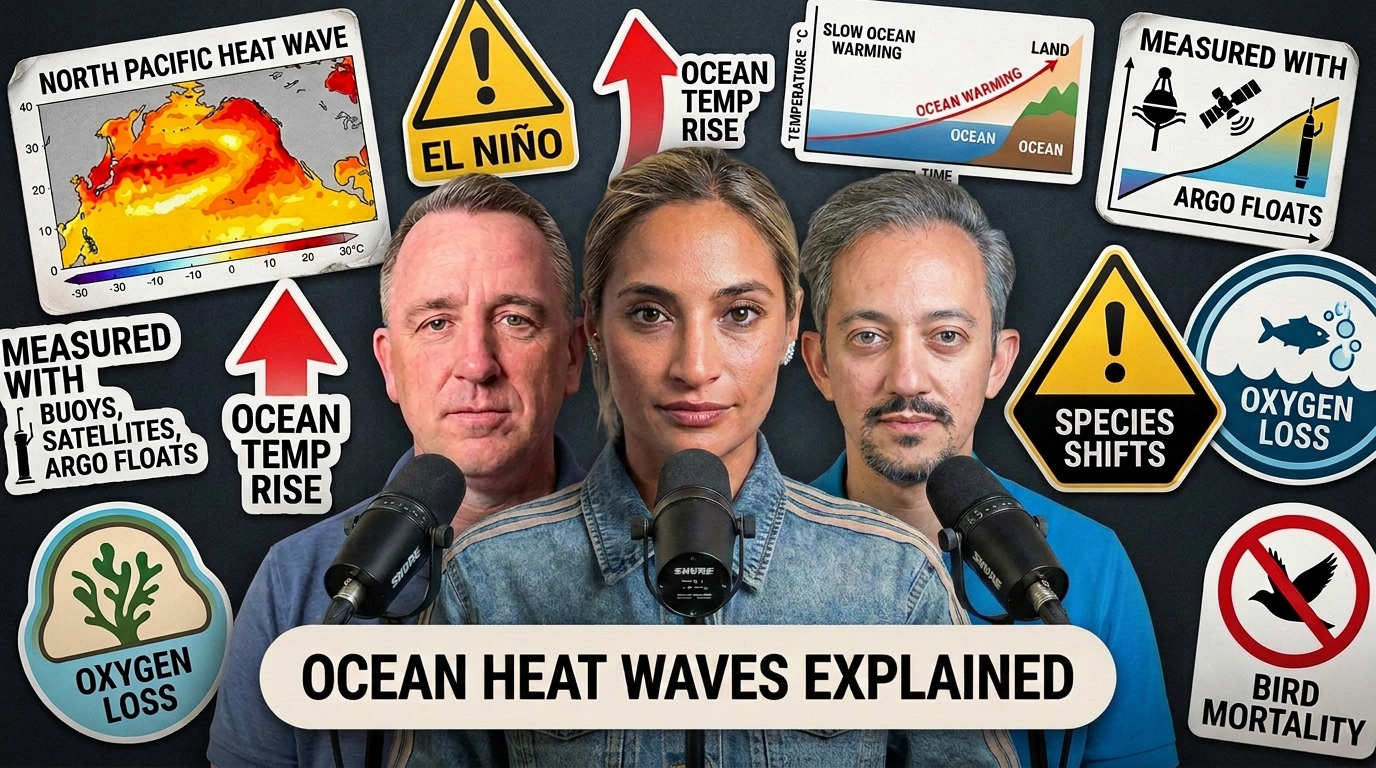
Marine heat waves occur when ocean temperatures remain unusually warm for an extended period. Oceanographer Mari Bif, an associate professor at the University of Miami’s Rosenstiel School of Marine, Atmospheric, and Earth Science, explained on Tidal Flooding Talk that these events can persist for weeks, months, or even years. Unlike land, the ocean warms and cools slowly, meaning a relatively small temperature anomaly can represent a substantial amount of stored heat.
That persistence matters.
One of the best-known examples was the North Pacific “Blob,” which lasted from roughly 2013 to 2015. According to Bif, that event disrupted marine ecosystems, contributed to harmful algal blooms, shifted fisheries, reduced ocean oxygen, and was associated with widespread seabird mortality. A second major event followed from 2019 to 2020. These impacts demonstrate that unusually warm water is not simply an interesting temperature statistic—it can reorganize coastal and marine systems.
Scientists are getting much better at observing these changes. Ocean monitoring now combines fixed moorings, satellites, and autonomous Argo floats that drift through the ocean while collecting temperature, salinity, and other measurements. Some floats profile water to depths of 2,000 meters, with newer systems reaching approximately 4,000 meters. Biogeochemical floats can also measure properties such as nutrients, particles, pH, and indicators of phytoplankton activity.
For coastal flood practitioners, the important lesson is that coastal risk does not begin at the shoreline.
The relationship between a particular marine heat wave and tidal flooding is not necessarily direct. Bif cautioned against drawing a simple line between a warm patch of ocean and increased coastal flooding or sea-level rise. Yet the broader ocean-atmosphere system is deeply connected. Marine heat waves can interact with large-scale climate patterns such as El Niño, while ocean temperatures influence ecosystems, atmospheric conditions, and the overall climate system.
That makes marine heat waves another reason coastal resilience needs to be multidisciplinary.
Tide gauges and flood maps remain essential, but understanding future coastal conditions also requires looking offshore, downward through the water column, and across entire ocean basins. The better we understand how heat moves through the ocean—and how the ocean responds—the better prepared coastal communities can be for the changing conditions arriving at their doorstep.
Experience Tidal Flooding Talk every Tuesday night, America’s leading show on coastal flooding resilience. Hosted by the New Jersey Coastal Coalition, which formed after Superstorm Sandy in 2012, it empowers leaders with dynamic workshops. Visit njcoastalcoalition.com to learn more!
When most people hear the words “heat wave,” they picture sweltering city streets, triple-digit temperatures and air conditioners running nonstop. But some of the most consequential heat waves are happening out of sight — in the ocean.
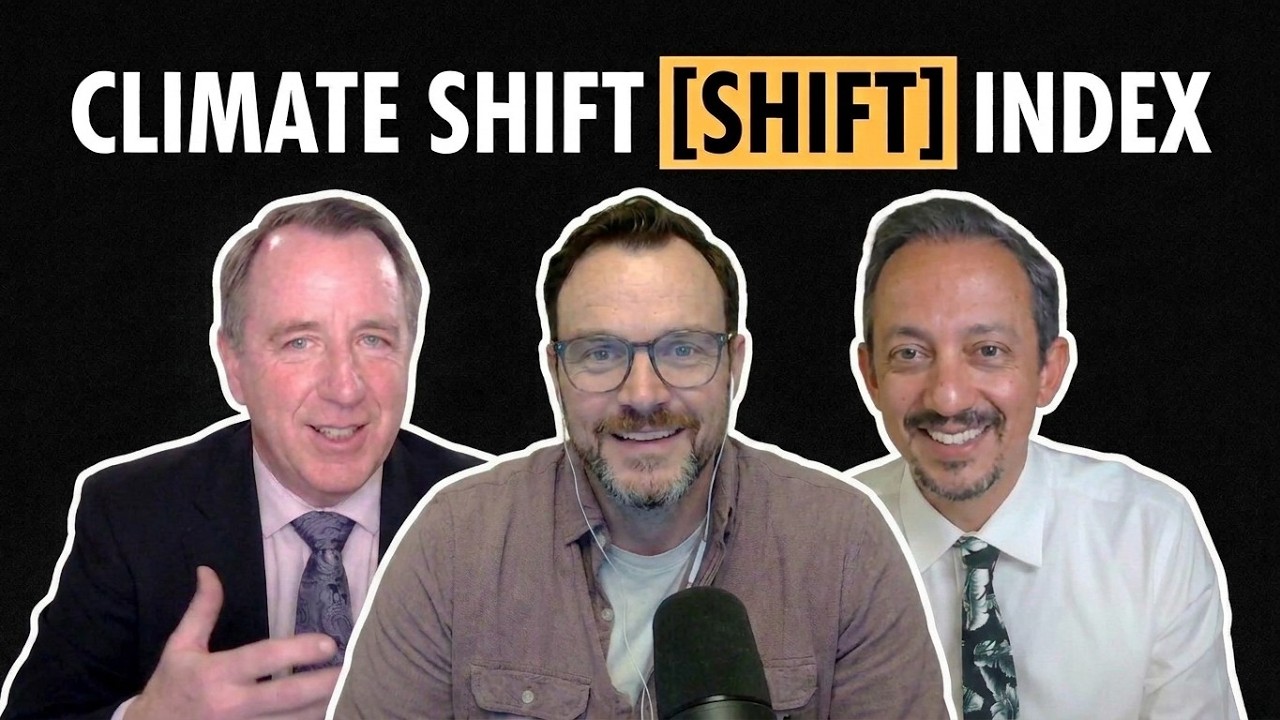
Marine heat waves are periods when ocean temperatures remain unusually warm for an extended stretch, and scientists are increasingly able to measure how much human-caused climate change is influencing those conditions. On a recent episode of Tidal Flooding Talk, Climate Central meteorologist Shel Winkley explained how a warming ocean can ripple far beyond the shoreline, affecting humidity, rainfall, hurricanes and even how well people sleep at night.
Climate Central’s Climate Shift Index is designed to put numbers on climate change’s influence. For land temperatures, the index runs from negative five to positive five. A reading of four indicates a temperature that would have been rare without climate change, while a five signals conditions that would have been virtually impossible without its influence.
The ocean version can produce far more dramatic numbers.
Because ocean temperatures change more slowly than temperatures on land, unusually warm water can carry an especially strong climate signal. Winkley said some sea-surface temperatures can be calculated as 500, 800 or even 1,000 times more likely because of climate change. About 90% of the excess heat associated with human-caused warming is absorbed by the ocean, he said.
That extra heat does not remain offshore.
Warmer oceans increase evaporation, pumping more moisture into the atmosphere. That added humidity can help keep nighttime temperatures elevated because humid air cools more slowly than dry air. Winkley said summer nighttime temperatures have been warming nearly twice as fast as daytime temperatures, with warmer oceans helping feed the moisture that pushes inland.
More atmospheric moisture can also mean heavier rainfall. Warmer ocean water can provide weather systems with a larger supply of moisture, potentially increasing both rainfall totals and rainfall rates.
Then there are hurricanes.
Tropical cyclones draw energy from warm water, and Climate Central is using ocean-temperature attribution to estimate how much climate change may boost a storm’s intensity. Even an increase of only a few miles per hour can matter because wind damage rises sharply as wind speeds increase. In some cases, Winkley said, the science can help determine whether climate change helped push a hurricane across a category threshold.
The takeaway is increasingly difficult to ignore: ocean heat is not simply an issue for swimmers, fisheries or coral reefs.
What happens in the water can reshape the weather people experience hundreds of miles inland — and the warmer the ocean becomes, the more consequential those connections may become.
In this episode, we explore the critical issue of coastal flooding and sea level rise, featuring expert insights from Dr. Wanyun Shao at the University of Alabama. We discuss risk assessment, social vulnerabilities, and practical measures for communities along the Atlantic and Gulf Coasts.
Experience Tidal Flooding Talk every Tuesday night, America’s leading show on coastal flooding resilience. Hosted by the New Jersey Coastal Coalition, which formed after Superstorm Sandy in 2012, it empowers leaders with dynamic workshops. Visit njcoastalcoalition.com to learn more!
Chapters 00:00 Introduction to Coastal Challenges 04:15 Understanding Flood Risks in Major Cities 10:33 Social Vulnerability and Flooding 16:50 Public Awareness and Preparedness 22:13 Strategies for Mitigating Flood Risks 27:39 Personal Reflections and Celebrations