
July 2026 did not ease quietly into the history books. Instead, it arrived with record heat, booming thunderstorms, flash flooding, tornadoes, wildfire smoke and an ongoing drought. At the Jersey Shore, residents went from searching for shade to watching streets fill with water, sometimes within the same week.
The month’s opening act was a major heat wave around the Fourth of July. Atlantic City International Airport soared to 106 degrees on July 4, tying its all-time record high. The heat even charged straight toward the beaches, where the ocean usually provides at least some relief.
Sea Girt reached 101 degrees on both July 3 and 4. Atlantic City also hit 100 degrees on both days. The usual cooling sea breeze was nearly absent, leaving beachgoers, parade crowds and holiday workers exposed to dangerous conditions.
The nights offered little relief. Newark Airport remained at 87 degrees early on July 3 before thunderstorms lowered the temperature later in the day. Without those storms, New Jersey may have set a statewide record for its warmest overnight low. State officials connected 29 deaths to the heat wave, showing that hot nights can be just as serious as triple-digit afternoons.
Then the atmosphere changed gears.
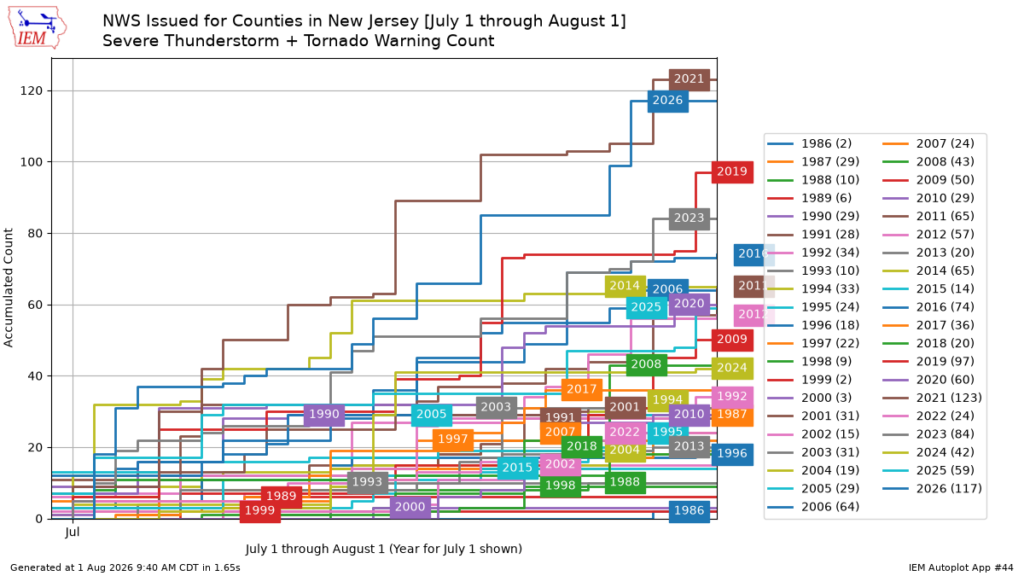
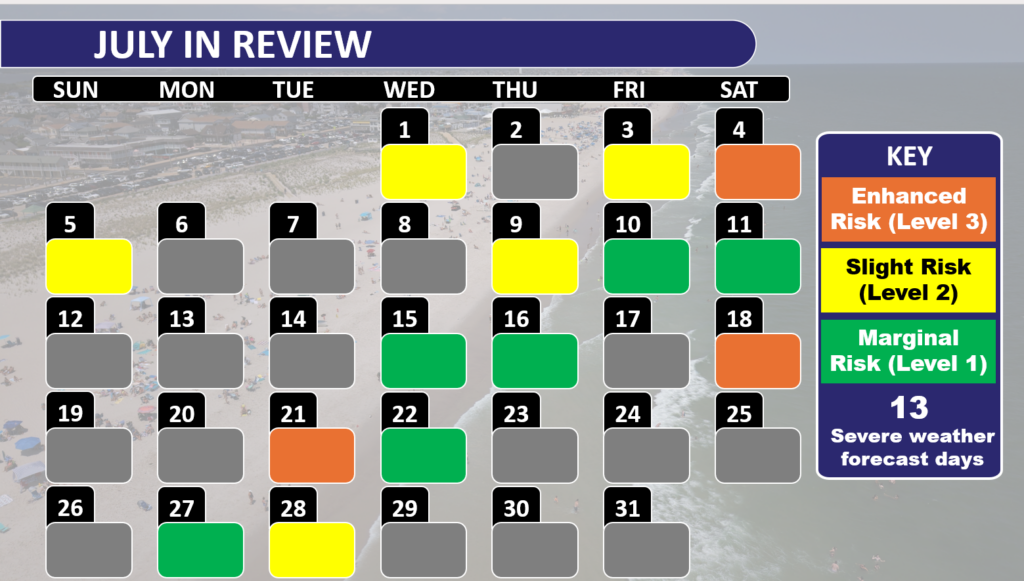
New Jersey experienced five separate rounds of severe weather during July. At least part of the state was placed under a severe-weather risk on 13 days, compared with a July average of about eight.
Four tornadoes were confirmed, including several in Morris County and a waterspout that crossed Delaware Bay before reaching Cape May Point. Tornadoes are rare in Cape May County, where cooler ocean air often acts as a lid on powerful thunderstorms.
Heavy rain created some of the month’s biggest problems along the Shore. Neptune received 6.6 inches of rain on July 6, including more than two inches in only 30 minutes. Roads closed, water rescues were needed and flooding affected several Monmouth County communities, including Highlands.
On July 16, another group of slow-moving storms unloaded over central Long Beach Island and nearby Stafford Township. The rain was extremely localized, leaving some parts of LBI soaked while other areas received very little.
All that rain did help New Jersey’s drought. Northern sections of the state received more than seven inches during the month, while the coast generally collected between 5.5 and 6 inches. However, severe or extreme drought conditions continued around Atlantic City, Galloway and lower Cape May County.
Canadian wildfire smoke also drifted into New Jersey, producing unhealthy air quality during the middle of the month. Conditions were not as dramatic as the orange skies of 2023, but the haze was a reminder that fires hundreds of miles away can still affect a Jersey Shore summer.
Despite the record heat early in July, cooler weather late in the month balanced the numbers. The statewide average temperature finished only about one degree above normal.
Still, July felt anything but normal. It was a month when the Shore’s weather repeatedly flipped the script, from scorching beaches to flooded streets and smoky skies.


