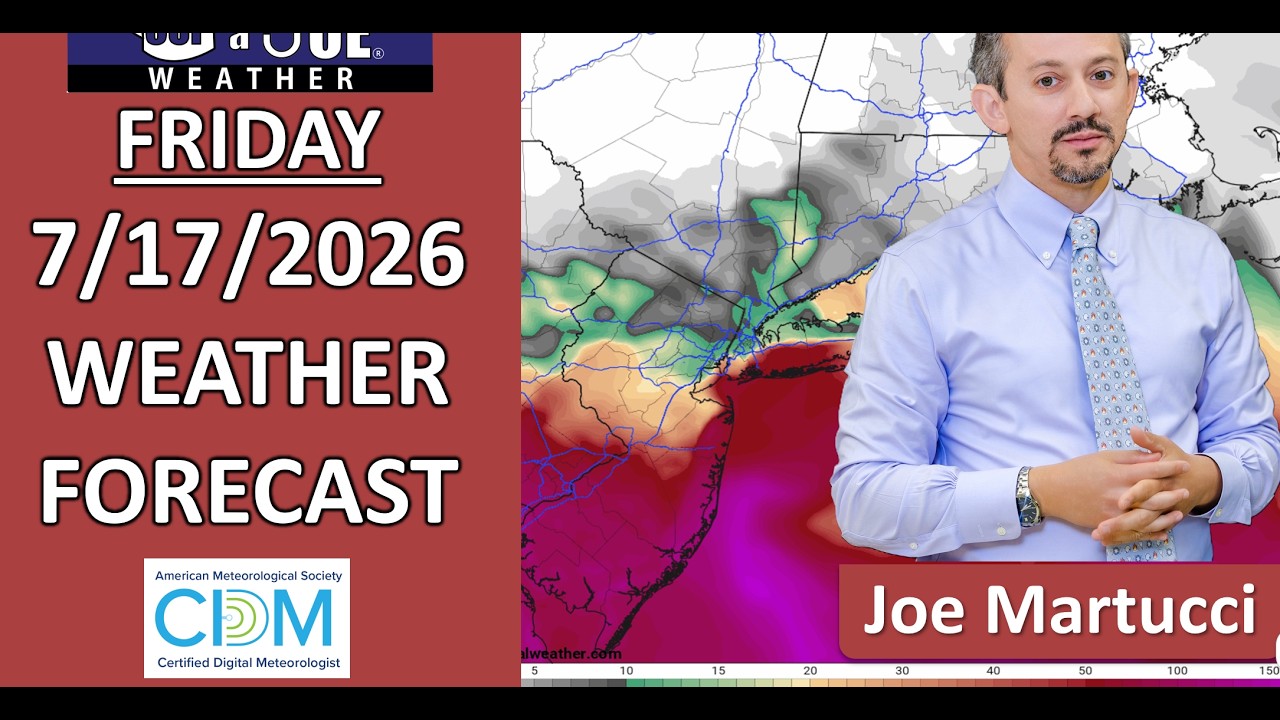
📽️FRIDAY’S FORECAST | If you liked Thursday, you’ll love today! Heck, you’ll love the weekend as well. It’s shades of September with crisp mornings. The one hiccup? Rip currents.
🏈 Your Rutgers tailgate headquarters! Parking at St. George is only 500 yards from SHI Stadium and features 500+ spots, clean restrooms, and quick access to River Road. It’s where Joe parks! Purchase at: www.rutgersparking.com.
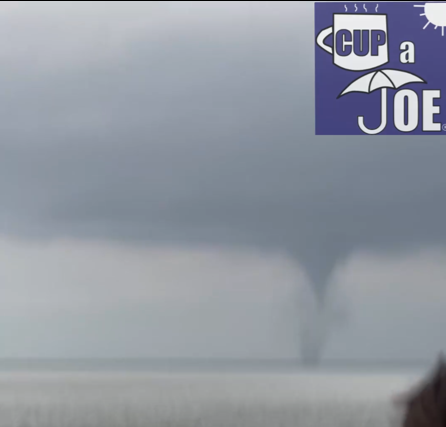
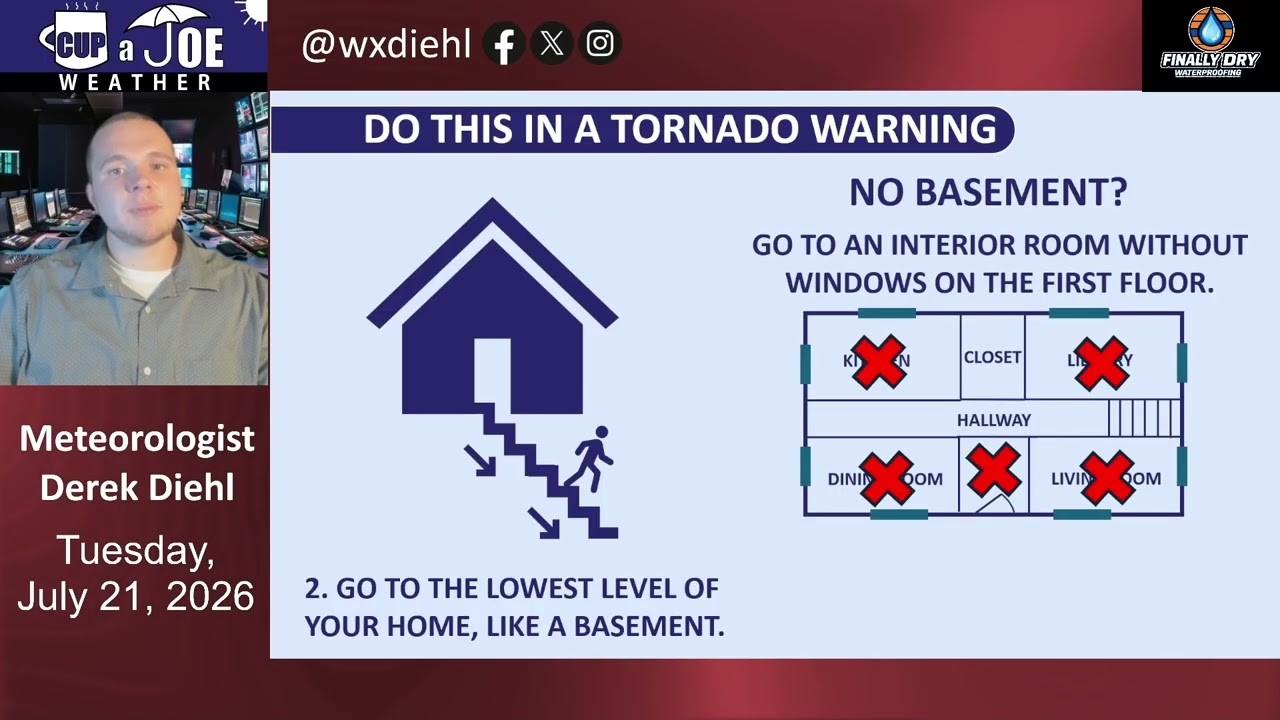
WEDNESDAY FORECAST – 🌪️But first, a review of yesterday’s waterspout/tornado event in Cape May. Hit-or-miss showers and storms will bug the Jersey Shore today, but we have a picture prefect weekend to look forward to! Meteorologist Derek Diehl has the details.
A waterspout is CLEARLY seen near the Cape May – Lewes Ferry harbor in Lower Township, Cape May County around 630PM Tuesday evening (7/21/2026).
At 613PM a waterspout cape from the Delaware Bay and moved ashore near Cape May Point. Emergency Management told me no injuries or significant building damage.
This is one of 3 confirmed rotating storms in NJ today. One tornado was confirmed in Stanhope, Morris County. Meanwhile, the other occurred near Pine Hill, also in Morris County.
A tornado watch is in effect Tuesday evening as a line of rotating storms moved through the state. This is the second tornado watch issued by the National Weather Service in less than a week for the area. The tornado watch on July 18, 2026 did not produce any tornadoes, though.
⛈️TUESDAY FORECAST – Severe weather and flooding present risks for today, beginning around 5PM! When will the weather revert to sunny conditions? Meteorologist Derek Diehl has the details.
Tired of water in your basement or crawlspace? Trust Finally Dry Waterproofing’s family-owned company to fix it right. We install permanent drainage solutions guaranteed for 2 ownerships with on limit! Get your FREE inspection at finallydrywaterproofing.net
Never worry about missing severe weather warnings again. Get a call from me, text, or email when your location is impacted. WeatherCall ensures you stay informed for just $15 a year. Sign up: https://ngorder.wxriskalerts.com/db_app2.php?station=cajx
SEVERE SATURDAY POSSIBLE | Some nasty storms are a threat later this afternoon and evening, but will any morning showers and wildfire smoke diminish the threat? It is a “boom or bust” type of day.
Come visit Headley Family Farm at 120 Province Road in West Creek! It’s where farming the pines meets the Jersey Shore. Get your Jersey Fresh produce here. Open weekends and some weekdays. Call us at 609-848-3763 or follow us on Facebook, too!
Wildfire smoke in New Jersey. It’s grayed our sky, with hints of orange, too.
In New Jersey, the smoke has been enough to reduce visibility. In fact, I (Joe Martucci) was driving back from the Ventnor Beach Concert at Ski Beach on Parkway North. Right as soon as you got into the Pinelands around exit 52, you noticed a layer of smoke along the tops of the trees. It looked like fog, but it was the Canadian wildfire smoke.
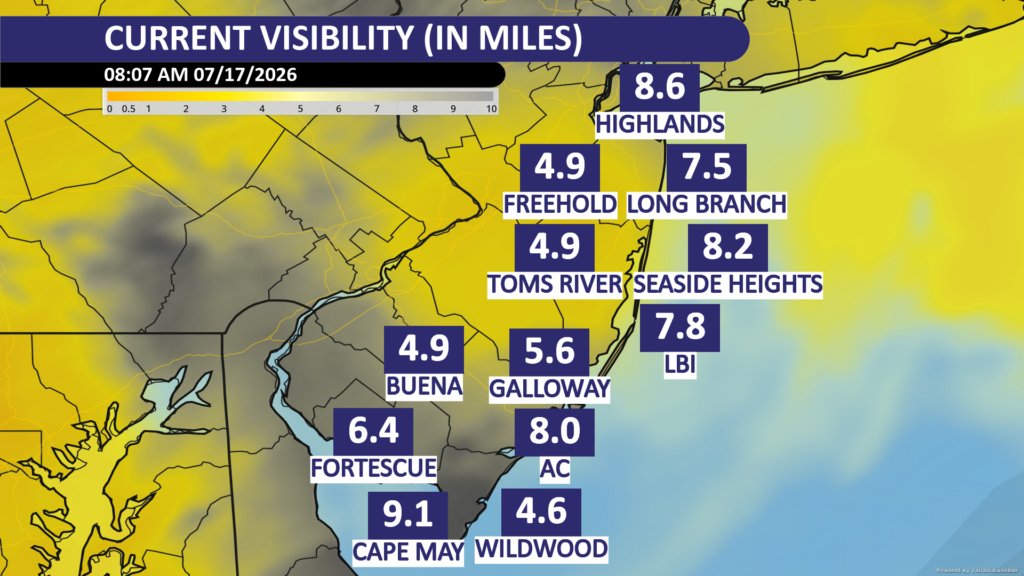
Visibility at 8:07 a.m. on Friday, July 17. Without the wildfire smoke, the visibility would be 10 miles. However, visibility is cut in half in spots as a result.
The culprit? Canada, and their wildfires.
I wrote that as it if we should “Blame Canada!” like the South Park show did once. While no one has directly blamed Canada maliciously to me, social media shows a few examples of people doing so (example, example).
The thing is… Canada can’t do much about it unless they spend much more money than they do now. Or, people move to where they haven’t moved before. Here’s why.
Lightning causes the vast majority of wildfires in Canada
As the climate warms, lightning has become more frequent. 93% of acres burned due to wildfires in Canada were caused from lightning, in 2023, according to research from the Northern Forestry Center.
In the United States, that number falls to 60%.
Country
Lightning-caused
Human-caused
Canada
About 83%
About 17%
United States
About 60%
About 40%
You can’t arrest lightning. You can’t charge it with arson. Lightning has been around long before humans and will be long after humans, too.
Canadian Wildfires Occur in Remote Regions
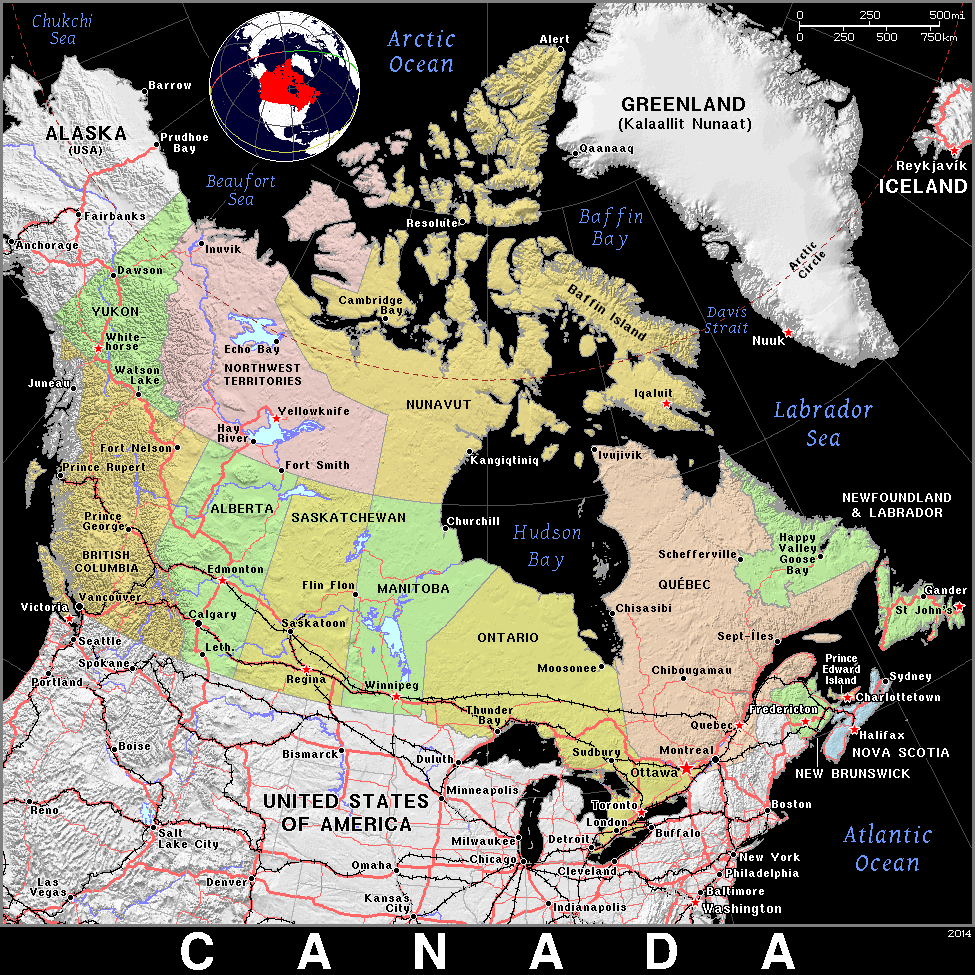
About 50% of all acreage burned from Canadian wildfires come from Canadian Provinces and Territories with a population density at or less than 2.5 people per square kilometer. That’s 6.5 people per square mile.
Northwest Territories – 21% of acres burned – 0.04 people per square kilmometer.
Saskatchewan – 18% of acres burned – 2.0 people per square kilometer.
Manitoba – 8% of acres burned – 2.5 people per square kilometer.
Yukon Territory – 4.5% of acres burned – 0.1 people per square kilometer.
Newfoundland and Labrador, as well as Nunavut also are very sparse, but contribute less than 1% to the total.
A map of Canada, including major highways and railroads.
When a wildfire occurs, there are few, if any, roads to drive to the fire. There also have to be firefighters stationed nearby, ready to go. These wildfires aren’t just occurring in remote areas 100 miles outside of a major city like Toronto. They’re happening 100 miles (and more) outside of towns like Yellowknife or Whitehorse, which have a few tens of thousands of people.
Even if you had firefighters pre-stationed, they need food, they need water. Those towns do not have the resources on their own to supply them. The federal government needs to step in. Which, they do, but it’s still a logistical challenge.
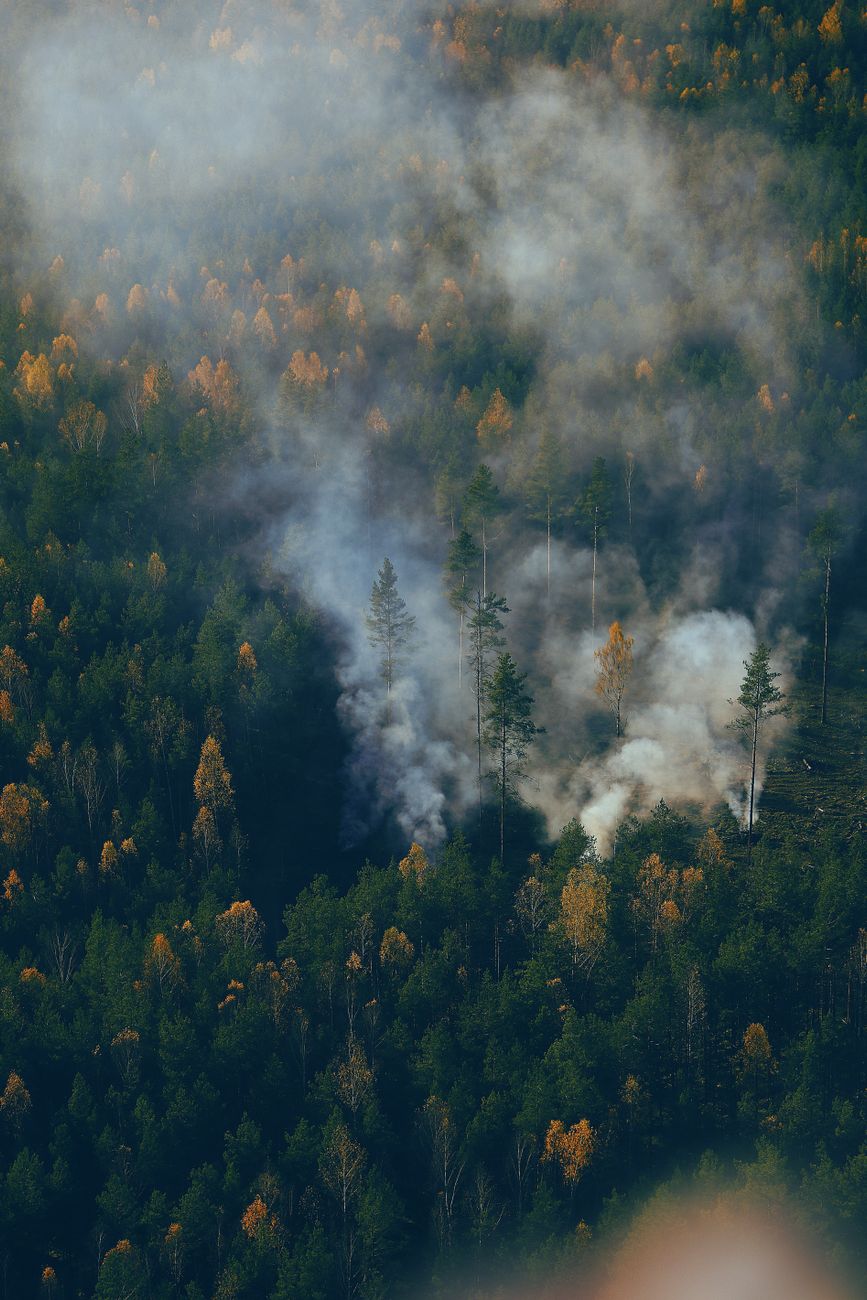
Firefighters in the Canadian forest (via Parks Canada Agency)
Why Can’t Canada Fight Fires By Air?
They can and that does overcome the challenges poised by lack of roads. However, air is not as effective as ground.
Canada cannot simply fight every remote wildfire from the air because aircraft alone rarely extinguish large, intense fires. Water and fire retardant drops mainly slow the flames, giving ground crews time to build firebreaks and secure the perimeter.
In remote forests, there may be no roads, safe landing areas, nearby water sources or crews available to finish the job.
Heavy smoke, strong winds, thunderstorms and nighttime conditions can also ground aircraft.
With thousands of fires across an enormous landscape, Canada must prioritize communities, infrastructure and fires that can realistically be controlled.
Plus, similar to the lack of roads, there are a lack of airports in those remote areas, too. Refueling must be closely coordinated.
Canadian Wildfires are Generally Larger than America’s
The vast boreal forests can start large fires at the tops of trees. On the ground, the deep layer of organic soil or peat can bring fire smoldering underground for a long period of time.
The United States has that in parts, like Alaska, next to Canada. However, Western United States Wildfires often have steep terrain and complex winds. That brings faster moving fires that are aggressive locally. However, it’s the massive wildfires in Canada that bring the large smoke plumes, not the localized ones.
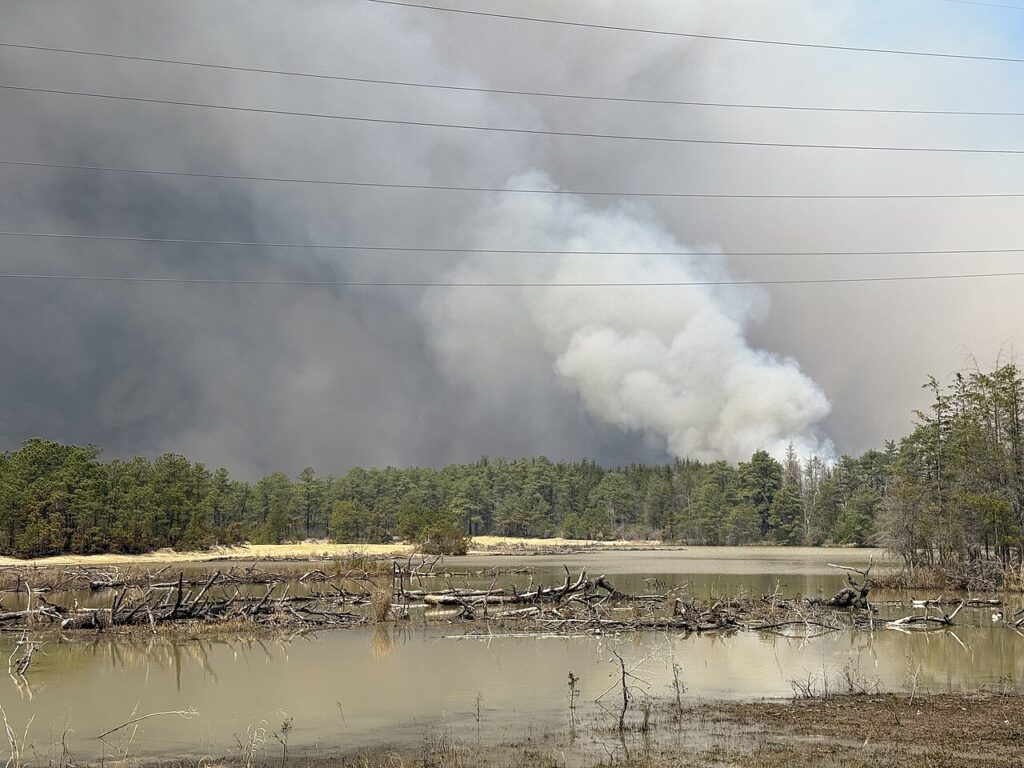
Also, smoke spreads the further from the source you are. Take, for example, the Jones Road Fire in April 2026 in Ocean County, NJ
Places like Long Branch and Cape May, which were east of the fire barely had smoke in the air. Meanwhile, they are both experiencing the smoky sky now with wildfires thousands of miles away.
In Conclusion
To be fair, wildfire smoke is hazardous to your health. Wildfire smoke contains PM2.5, tiny particles made of soot, ash, organic carbon and other burned material. These particles can travel deep into the lungs and enter the bloodstream. Smoke may also contain hazardous gases, including carbon monoxide, benzene, formaldehyde and acrolein, according the Environmental Protection Agency.
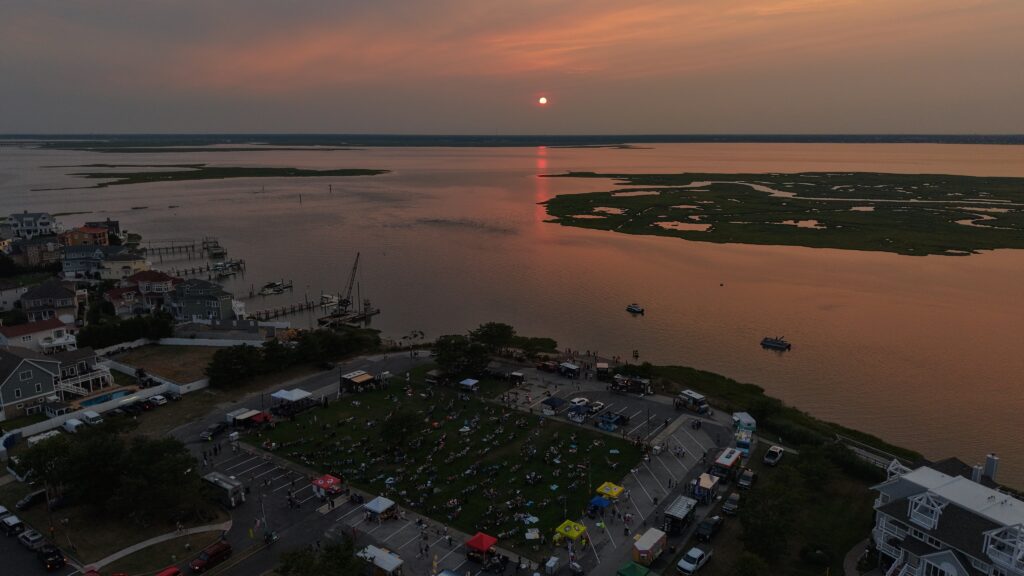
A smoky sunset in Ventnor City, NJ on July 15, 2026
At the same time, there’s not a whole lot Canada can realistically do to stop this. When fires erupt in the Pine Barrens of New Jersey, firefighters can get there in minutes. Planes can drop fire retardants with ease, refueling at nearby airports. Where the wildfires usually burn in Canada, those options just aren’t possible.
📹FRIDAY’S FORECAST | After a day of powerful storms in Ocean County and plenty of wildfire smoke. We got:
Plenty of wildfire smoke today.
Powerful storms possible Saturday.
Let’s talk you through it.
🏈 Your Rutgers tailgate headquarters! Parking at St. George is only 500 yards from SHI Stadium and features 500+ spots, clean restrooms, and quick access to River Road. It’s where Joe parks! Purchase at: www.rutgersparking.com.
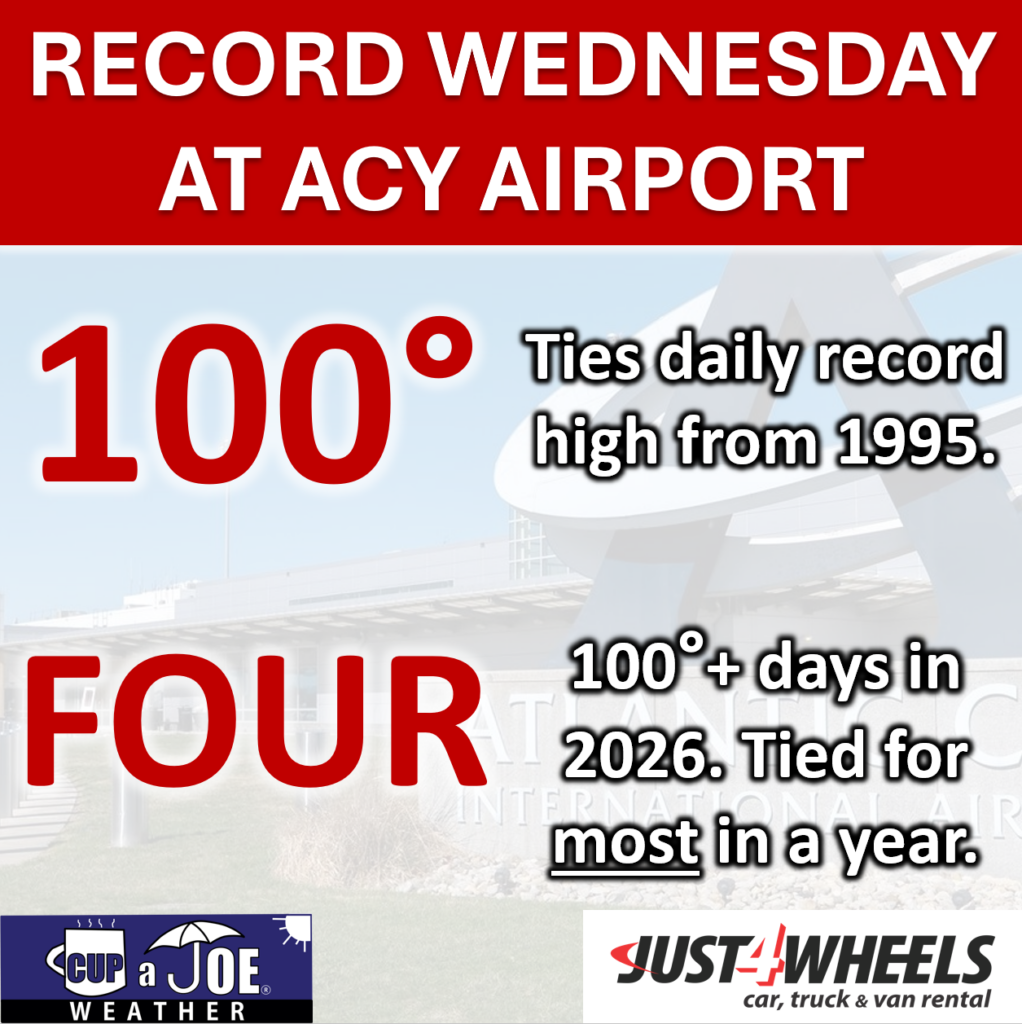
The summer heat at Atlantic City International Airport has reached rare territory.
The airport hit 100 degrees Wednesday, July 15, tying the daily record set in 1995. It was also the fourth day this year with a temperature of at least 100 degrees.
That ties the airport’s record for the most 100-degree days during an entire year. The remarkable part? Atlantic City reached that total by the middle of summer.
If the airport hits 100 degrees one more time in 2026, this year will hold the record by itself.
This is no small achievement, either. Official temperature records at the airport date back to 1943, according to the National Weather Service. That means more than 80 years of weather history are being challenged by this summer’s extreme heat.
Why settle for big chains? Choose Just4Wheels’ family-owned locations all across NJ! Rent brand-new sedans, passenger vans, box trucks and more today! Visit www.just4wheels.com or call 877-650-3500.
🔥THURSDAY’S FORECAST | Smelling the wildfire smoke? It’s here. It’ll be very gray, maybe orange, with poor air quality. Otherwise, it’s still hot, but not as muggy. Saturday will be a “boom or bust” thunderstorm day, though.
Why settle for big chains? Choose Just Four Wheels Car, Truck and Van Rental family-owned locations all across NJ! Rent brand-new sedans, passenger vans, box trucks and more today! Visit www.just4wheels.com or call 877-650-3500.