
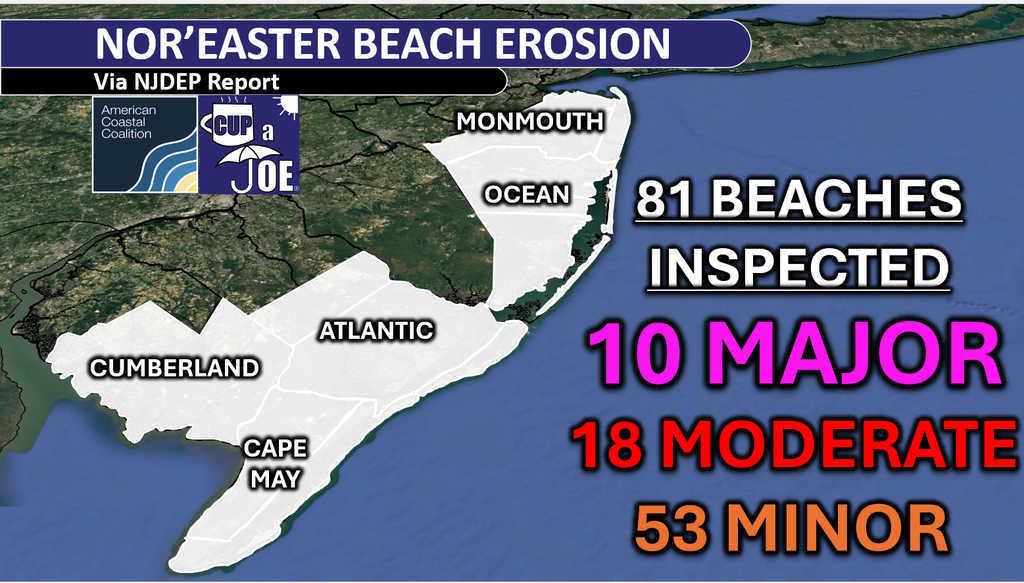
The NJDEP went to every beach in NJ and here’s what they found.
10 beaches with major erosion, 18 beaches with moderate erosion, 53 beaches with minor erosion.
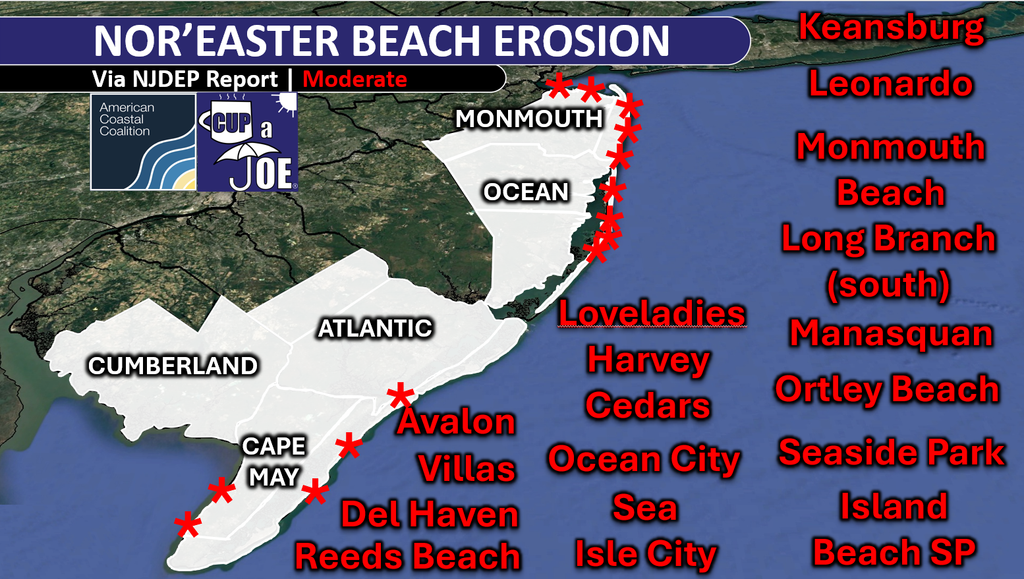
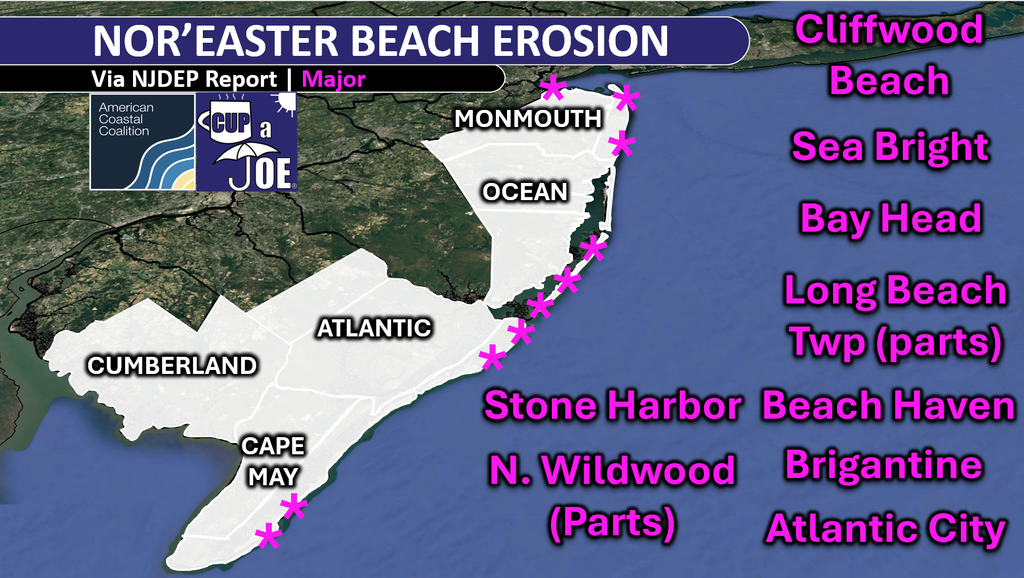
Honestly, I thought it’d be worse. The multiple high tides with over 3 feet of storm surge can create major scarping (cliffs of sand) quickly. Cumberland County fared the best. This wasn’t a Delaware Bay storm this time.
Still, it was significant, and early. Keep in mind that nor’easter season doesn’t traditionally begin until Mid-October. With a very strong to record El Nino, more of this is certainly possible.
The nor’easter brought up to 12 consecutive tides with tidal flooding, and beach erosion, to the Jersey Shore. Nearly every station that faces that Atlantic Ocean had six consecutive high tides with flooding.
Furthermore, tides gauges had one of their highest tides on record that Saturday morning (9/26). That included Atlantic City, where the 12th highest tide since 1911. That’s the 12th highest out of over 80,000 high tides.
Strong winds Friday night and Sunday morning also helped to erode beaches. Gusts topped 60 mph in Avalon (Cape May County), Ship Bottom (67 mph), Harvey Cedars (69 mph), Island Beach State Park (70 mph) and Surf City (74 mph).
Read their full report here. How’d you make out?


